

Author: Developing Tank
The Formation of Cohen’s Style and Approach
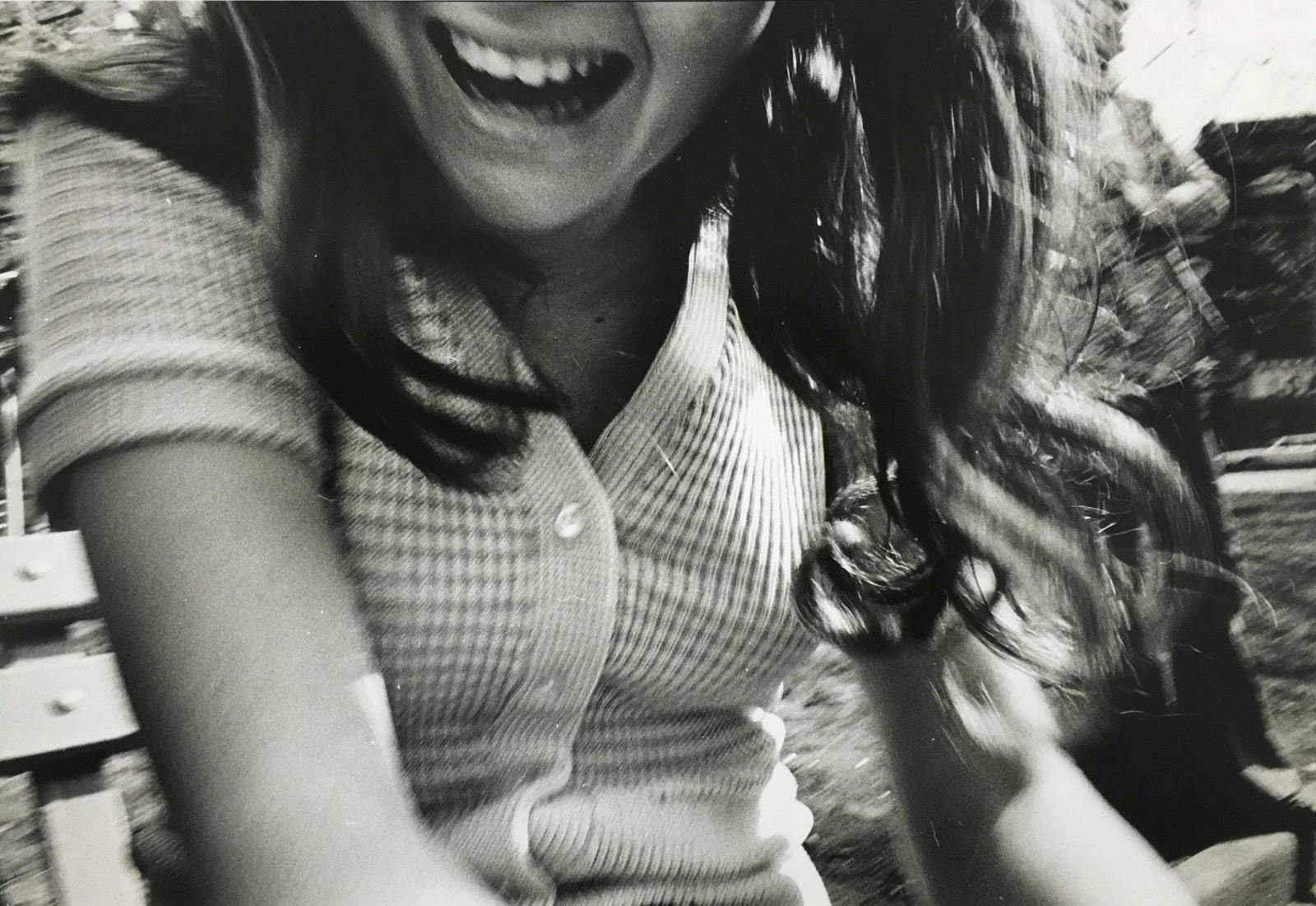
Mark Cohen stands apart as one of the most invasive, instinctive, and prolific street photographers in history. Over his lifetime, he’s claimed to have taken more than 800,000 photographs, most of which he’s never even seen. His work is defined by flash-lit fragments of strangers, shot at extreme proximity, often without looking through the viewfinder. The resulting images, cropped torsos, shoes, knees, faces cut in half, vibrate with a raw tension that makes them feel less like documentation and more like glimpses of a subconscious dream. “I became a surrealist because I kept walking around the same blocks,” he said, “and I started taking a picture of a guy’s shoe. I didn’t know what I was doing exactly. I was just being led by whatever I would see.”
Born in 1943 in Wilkes-Barre, Pennsylvania, Cohen never felt the pull to join the masses of photographers heading to New York. Instead, he stayed in his small industrial town and turned it into his own endless stage. Every alleyway, bus stop, and porch became a site of visual experimentation. Despite the quiet setting, his images feel more intense than most work made in bigger cities. This intensity comes from how close he got to people, often just a few feet away, and how he transformed ordinary street moments into surreal compositions through aggressive framing and the piercing burst of his flash.
Cohen’s technical foundation was built early. He learned to develop and print in his basement as a teenager after his uncle introduced him to darkroom work. A friend of his father’s also loaned him a Leica 3F and lenses for two years, giving him access to professional tools before he could afford his own. The final influence was Henri Cartier-Bresson’s The Decisive Moment, which set his lifelong commitment to full-frame shooting, no cropping, no manipulation, just instinct and timing.
Driven by Instinct
By the 1960s and 70s, Cohen had turned his routine into an obsession. He would shoot three rolls of film in two hours, develop them as soon as he returned home, and spend the night printing. Out of hundreds of exposures, only a handful became prints. This process generated hundreds of thousands of negatives, most unseen, and helped earn him recognition early in his career. In 1969, MoMA purchased two of his photographs, and by 1973, he had a solo exhibition there at the age of thirty. In 1975, he received a Guggenheim Fellowship, cementing his place among the era’s most distinctive photographers.
What made Cohen’s work so radical was not just its content but its physicality. Shooting with small cameras and fast film, he often held the camera at his waist, firing without raising it to his eye. “If you have your camera up to your eye, you can’t keep track of what’s going on,” he said. “By holding it down here, I can suddenly take pictures.” The results are images that capture the before or after of Cartier-Bresson’s decisive moments, a visual language of interruption rather than resolution. Cohen called this approach his “macro-play,” a theater of intrusion where proximity and flash distorted ordinary human gestures into symbols of energy, anxiety, and curiosity.
Street Tensions
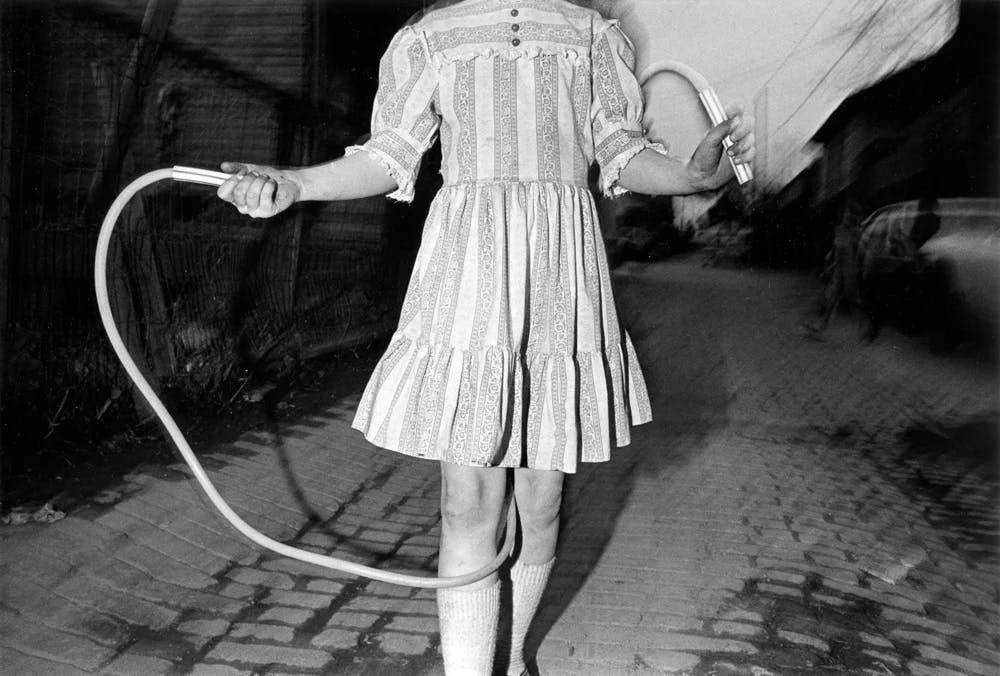
This level of intrusion naturally caused friction. Many subjects were startled, sometimes angry, occasionally physical. Yet Cohen brushed off the criticism, arguing that his work was no more invasive than the cameras that already lined every street. “There are cameras everywhere you look,” he said. “If I take a picture of a knee and put it in a book, I’m not identifying the place or who it is, it’s just a picture of a knee.” His defiance reflects a belief that photography’s power lies in the ambiguity between intimacy and distance, art and trespass.
Cohen’s most iconic body of work, Grim Street, captures life in Wilkes-Barre from the 1960s through the 80s. Unlike the crowded avenues of New York or Tokyo, Wilkes-Barre offered a slower rhythm, porches, kids in the street, people escaping the summer heat. Cohen learned where and when life would appear, from bus stops to bridges where people hid from the rain. Each frame is a fragment of small-town America seen through the lens of surrealism, everyday bodies transformed into geometry, gestures into abstract forms.
In 1973, Cohen spent a month in New York while attending an NYU film workshop. During that summer, he shot what would become Tall Socks, a series of unseen images rediscovered decades later. The photographs capture fragments of the city’s chaos during one of its roughest eras, focusing on the same close-up details, hands, knees, legs, that defined his earlier work. Despite the city’s decay, Cohen found beauty in its texture, its rhythm, and the details others ignored.
Evolution: Color and Relocation
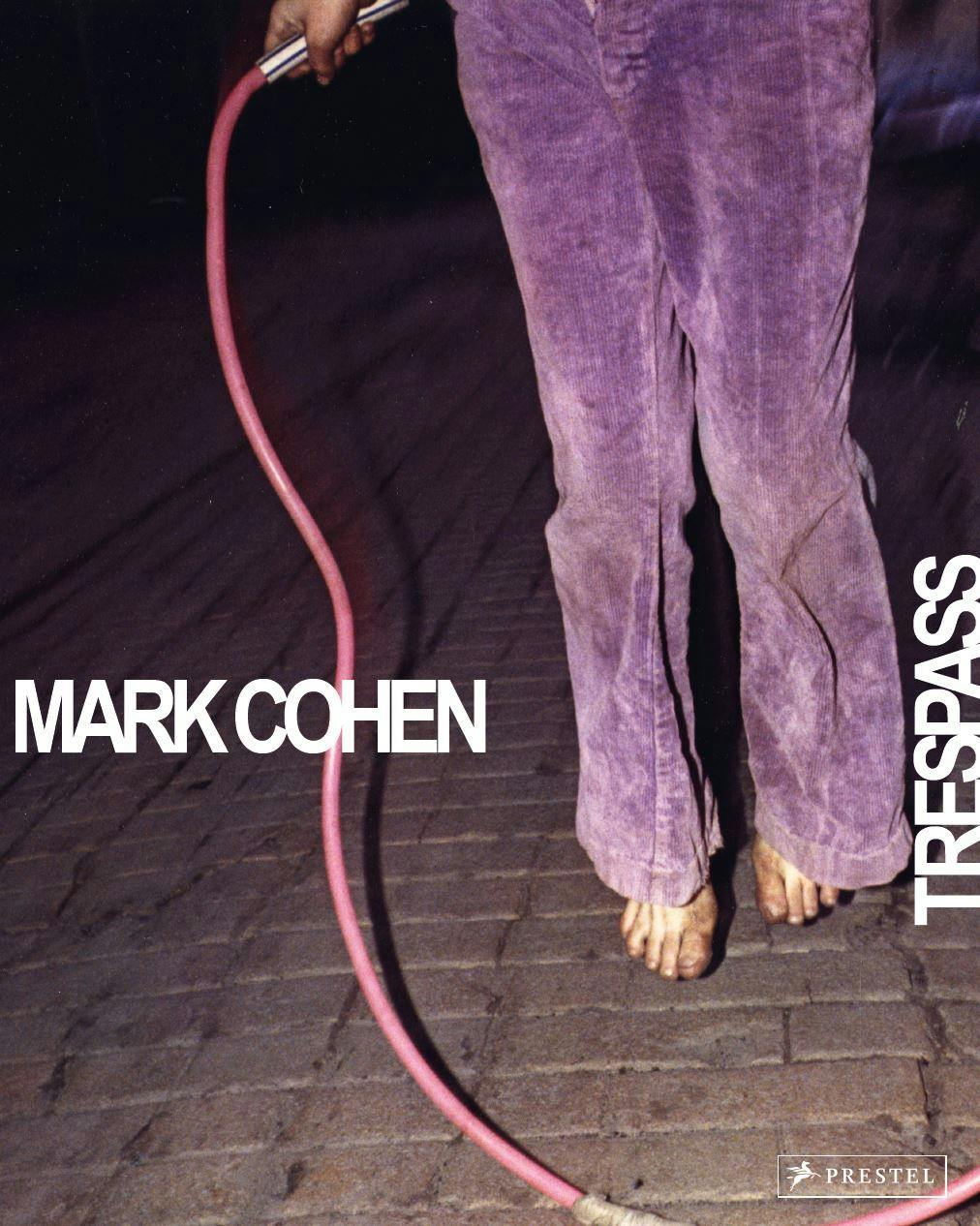
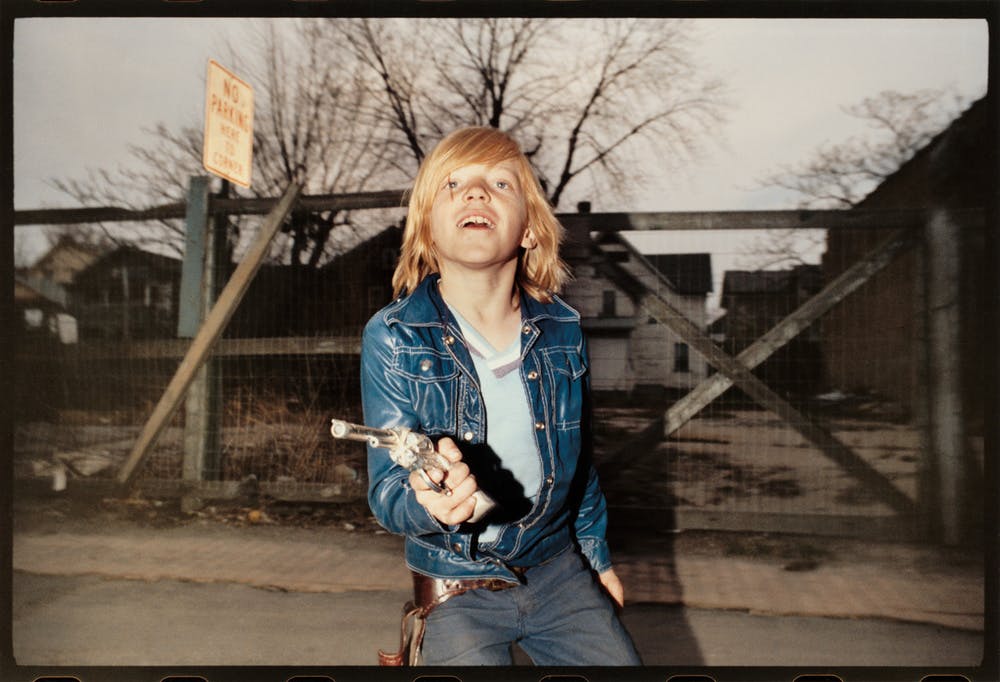
Later in his career, Cohen began working in color, long before color street photography gained legitimacy. His book Trespass showcases vivid early color images from the 1960s and 70s, years before Eggleston’s MoMA debut made the medium mainstream. For decades, these color works were overlooked, dismissed as less serious than his black-and-white photographs. Only recently have they been reevaluated for their boldness and experimentation. “I always saw color,” he said. “When you’re only using black-and-white film, you don’t think about it. Adding color is like adding flash to a picture.”
After decades in Wilkes-Barre, Cohen eventually relocated to Philadelphia in the early 2010s. The move marked an end to his anonymity. He had become too recognized in his hometown to work freely. Yet even in his later years, his curiosity hasn’t faded. His current exhibition, Low Ideas, on view in Paris through January 2026, continues his fascination with fragments, this time turning his lens on discarded objects shot at ground level, continuing his lifelong obsession with seeing the world differently.
Mark Cohen’s work reminds us that photography isn’t just about seeing, it’s about not seeing. It’s about trusting instinct over control, chance over composition. In his words, “A roll of film is like today’s glass plate. I am surprised by the negatives of pictures that I forgot that I might have taken only hours ago. It is all chance.”
